Featured and Latest Posts


What Do Systematic Fund Managers Actually Believe?
When it comes to systematic investing, the labels can be misleading. Index fund. Smart beta. Factor strategy. Quant active. These terms are often used interchangeably, but behind them lie profoundly different beliefs about how markets work and how best to capture returns.
This post dives beneath the surface to explore the investment philosophies of seven major firms: Research Affiliates, AQR, Dimensional, Avantis, Vanguard, BlackRock, and State Street. Some believe markets are efficient and best owned passively. Others think anomalies exist - which are persistent patterns like value, momentum or low volatility that can be systematically harvested.
Same data, same markets. But radically different interpretations.
If you’ve ever wondered why one firm tilts towards small-cap value, another reweights by fundamentals, and another just hugs the benchmark, this breakdown is for you.
Understanding these differences isn’t just academic; it shapes how portfolios are built, how returns are earned, and what risks investors take on along the way.

DIY Investing vs Hiring a Financial Adviser: Who Comes Out Ahead?
DIY investing has never been easier. With low-cost index funds, digital platforms, and a wealth of financial content online, going it alone is now a real option. But just because you can manage your money yourself, does that mean you should?
Research suggests that investors who work with a financial adviser often end up better off; not because of superior fund picking, but because advisers provide structure, planning, and behavioural discipline. Studies show that advised households accumulate significantly more wealth over time, with UK data from the International Longevity Centre showing gains of over £40,000 in total assets for those who took advice.
This post explores the real value of financial advice: from detailed lifetime cash flow modelling and tax optimisation, to helping clients avoid poor decisions during market turmoil.
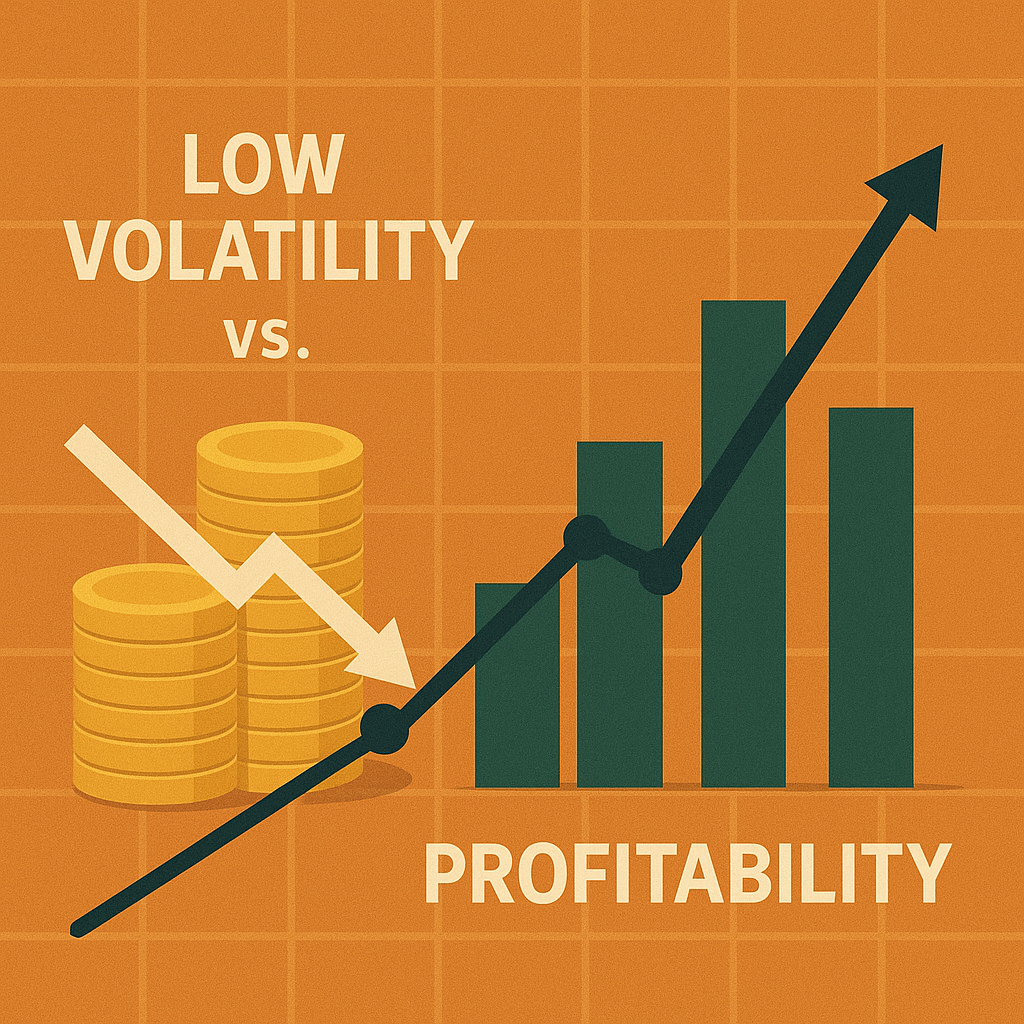
When Asymmetry Changes Everything: Rethinking Factors in a Frictional World
Factor investing often relies on neat, long–short academic constructions that assume away the messiness of real markets. But what happens when we strip away the elegance and impose real-world constraints; no shorting, limited leverage, and actual transaction costs? Van Vliet et al. (2025) take on this challenge and deliver a striking conclusion: many celebrated factor premia fall apart under friction, but low-volatility survives and thrives. It is not just an anomaly, but a resilient source of risk-adjusted returns in long-only portfolios. In the debate between factor purity and practical implementation, low-volatility may be the quiet winner.

Smarter Indexing, Better Results: 10 Reasons to Consider Dimensional and Avantis
At first glance, portfolios from Dimensional Fund Advisors (DFA) and Avantis Investors may look similar to traditional index funds. They are broadly diversified, low-cost, and systematic in their approach. But beneath the surface lies a crucial difference: these firms are not content with simply tracking the market. Instead, they intentionally tilt their portfolios towards sources of higher expected returns, aiming to deliver performance beyond that of a typical market-cap-weighted index like those offered by Vanguard.
Good financial decisions aren’t about predicting the future, they’re about following a sound process today.
In investing, outcomes are noisy. Short-term performance often reflects randomness, not skill. Yet fund managers continue to pitch five-year track records as if they prove anything. They don’t.
As Ken French puts it, a five-year chart ‘tells you nothing’. The real skill lies in filtering out the noise, evaluating strategy, incentives, costs, and behavioural fit.
Don’t chase what worked recently. Stick with what works reliably.