Featured and Latest Posts



What Due Diligence Should an IFA Complete Before Adding a Fund to a Client Portfolio?
Fund due diligence is not about chasing recent performance. It is about understanding what a fund is designed to do, how it generates returns, who is responsible for it and what could go wrong. For an adviser, a robust process should consider philosophy, people, costs, liquidity, operational strength and client suitability, whilst documenting the reasons for selection and monitoring whether the original case remains valid over time.
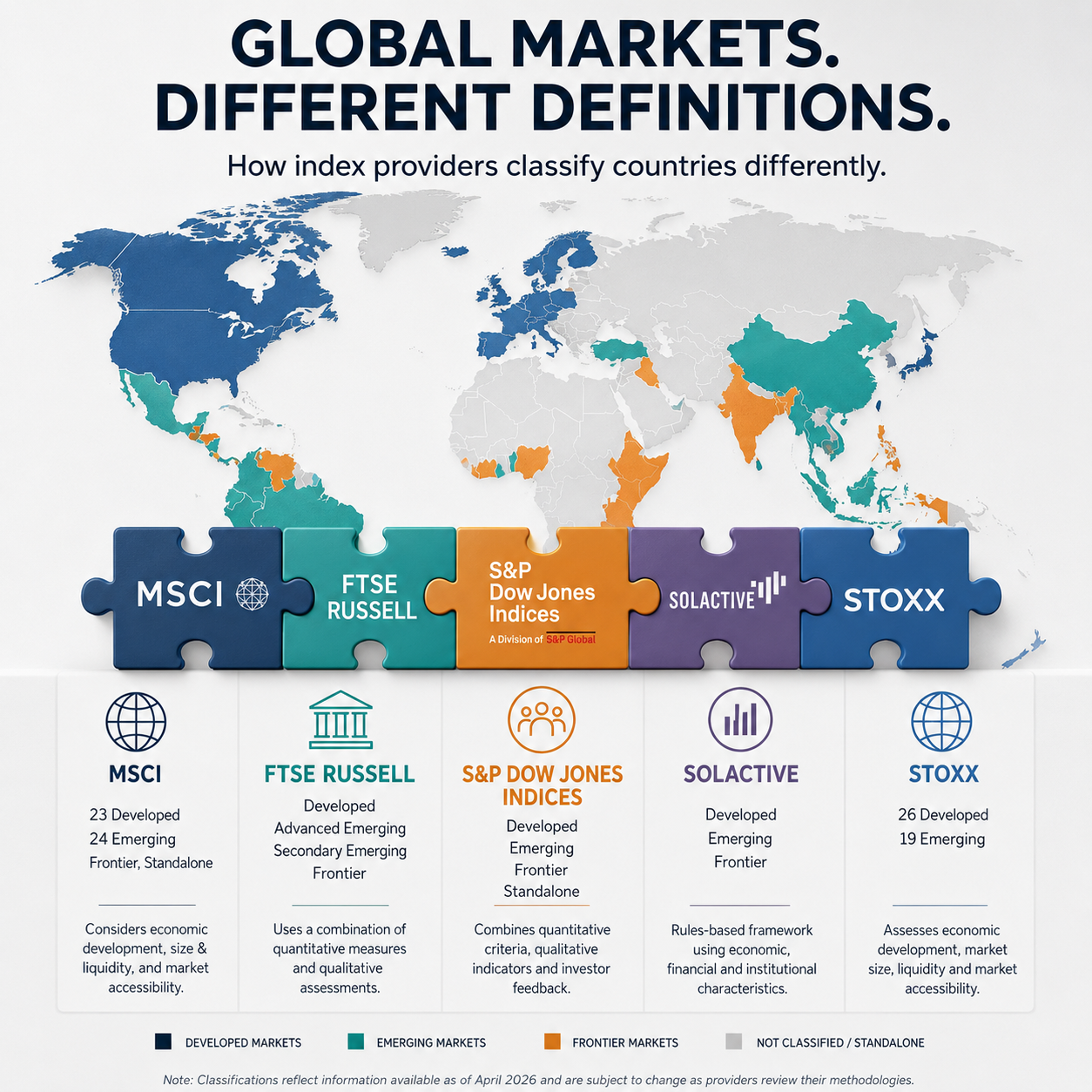
Differences between the Most Prominent Index Families
A global equity tracker portfolio sounds simple: buy the developed world, add emerging markets, and you have covered most of the investable equity market. But the words ‘developed’ and ‘emerging’ do not mean exactly the same thing to every index provider. South Korea, Poland, Peru and Vietnam can sit in different places depending on whether the fund tracks MSCI, FTSE Russell, S&P DJI, Solactive or STOXX. For investors combining separate developed and emerging markets funds, that can create accidental gaps, overlaps and meaningful tracking error.

Managed Futures: What Are They All About?
Managed futures are strategies that use futures contracts to take long and short positions across markets such as equities, bonds, currencies and commodities. The best-known approach is trend following, where the strategy tries to participate in persistent price moves rather than predict the economy directly.
Their appeal is diversification. Unlike traditional equity and bond funds, managed futures are not dependent on markets rising and can potentially benefit from falling prices as well as rising prices. However, they are not portfolio insurance. They can struggle in choppy or trendless markets, and their ‘crisis alpha’ is not guaranteed. Used carefully, their role is best understood as a diversifying return stream rather than a replacement for equities or bonds.

Tracking Difference and Tracking Error
Tracking difference and tracking error are both used to judge how closely a fund follows its benchmark, but they answer different questions. Tracking difference tells you the actual return gap over a specific period: did the fund beat or lag the index, and by how much? For passive funds, this figure is often slightly negative because real-world funds face costs that an index does not, including ongoing charges, transaction costs and cash drag.
Tracking error, by contrast, tells you how variable that return gap was along the way. A fund can have a low tracking error whilst still consistently lagging the index by a small amount. Put simply, tracking difference is where the fund finished relative to the benchmark; tracking error is how smooth or erratic the journey was.
Good financial decisions aren’t about predicting the future, they’re about following a sound process today.
In investing, outcomes are noisy. Short-term performance often reflects randomness, not skill. Yet fund managers continue to pitch five-year track records as if they prove anything. They don’t.
As Ken French puts it, a five-year chart ‘tells you nothing’. The real skill lies in filtering out the noise, evaluating strategy, incentives, costs, and behavioural fit.
Don’t chase what worked recently. Stick with what works reliably.